
Posted by Jen Smith on July 17, 2025
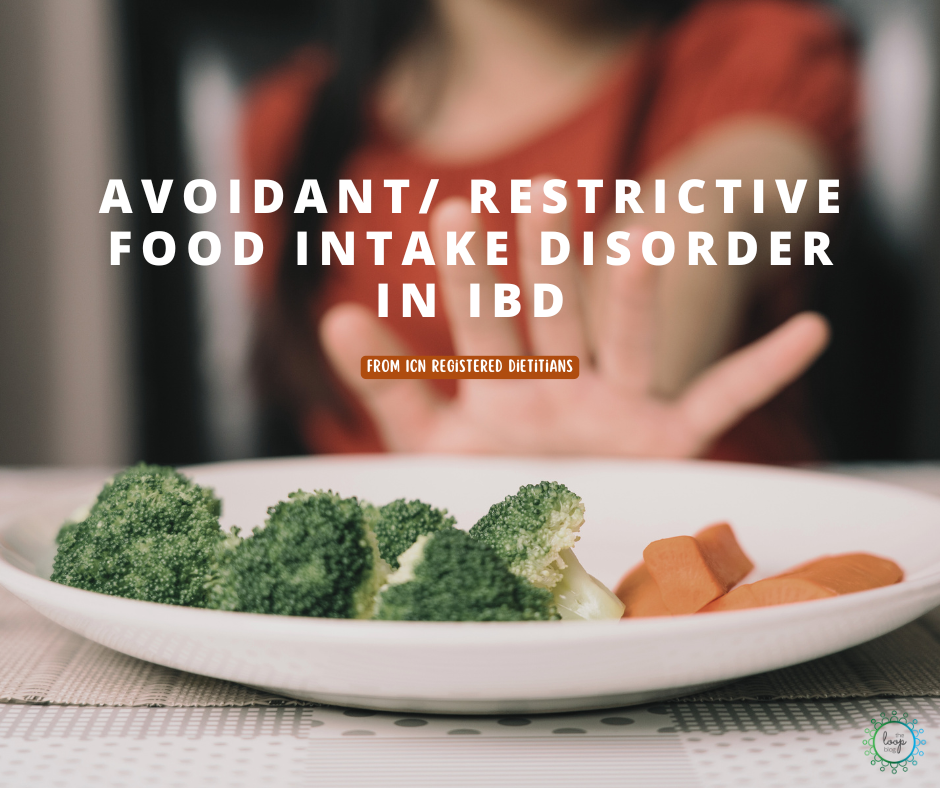
In this post, ICN Registered Dietitians provide an overview of Avoidant/Restrictive Food Intake Disorder (ARFID), including information on what ARFID is (and is not), how it is diagnosed and treated, how prevalent it is and what better recognition of ARFID might mean for the pediatric IBD population. In collaboration with the ICN Social Workers & Psychologists group, ICN RDs share tips on what to do if you are concerned about ARFID.
What is Avoidant/Restrictive Food Intake Disorder?
ARFID stands for Avoidant/Restrictive Food Intake Disorder, and it is a type of eating disorder. Individuals with ARFID limit the volume and/or variety of food they consume, however, the limitations in eating are not related to issues with body image. In ARFID, restriction or avoidance in eating is related to picky eating, lack of interest in eating/poor appetite, and or fear of negative consequences from eating.
Does everyone who is a picky eater have ARFID?
No, not everyone who is a picky eater has ARFID. According to the Diagnostic and Statistical Manual of Mental Disorders, Fifth Edition (DSM-5), ARFID is associated with significant weight loss or failure to achieve expected weight gain or faltering growth in children, significant nutritional deficiency, dependence on enteral feeding or oral supplements, and/or marked interference with psychosocial functioning. The eating disturbance cannot be attributed to a current medical condition (like an IBD flare) and cannot be explained by lack of food or by an associated culturally sanctioned practice (such as a family celebrating Ramadan).
How is someone diagnosed with ARFID?
ARFID is a clinical diagnosis meaning that a healthcare provider will need to use a combination of patient and caregiver reporting, screening measure(s), and clinical expertise to make a diagnosis. While there are screening questionnaires that can be used to help determine the possible presence of ARFID, a healthcare provider would use the specific criteria outlined in the DSM-5 to officially diagnose ARFID.
Is ARFID common for someone who has Inflammatory Bowel Disease (IBD)?
The prevalence of ARFID in the general population is not well established. Some data suggest the prevalence in general pediatrics could be approximately 3%. In adults with IBD, the prevalence of ARFID has been reported at 10-20%. There is limited information on the prevalence of ARFID in pediatric IBD, however, there are centers (including Nationwide Children's Hospital) currently involved in research in this area, so more to come.
Malnutrition is found in approximately 15-30% of children and adolescents with IBD and lower body mass index (BMI) at diagnosis is associated with higher risk for hospitalization and higher risk of disease exacerbation. Micronutrient deficiencies are common in IBD with 60-90% of patients presenting with iron deficiency and 15-50% of patients presenting with vitamin D deficiency at diagnosis. Recognition of ARFID in pediatric IBD could lead to earlier intervention, which may improve nutrition status and overall patient outcomes.
What should someone do if they have concerns for ARFID?
If you are concerned about ARFID, please set up time to speak with your/your child’s pediatrician, GI specialist, therapist/psychologist and/or registered dietitian. Medical providers may send referrals to other appropriate specialists for further evaluation and treatment. A multidisciplinary team comprised of therapists/psychologists, dietitians and medical providers specializing in eating disorders is recommended.
How is ARFID treated?
Current ARFID treatment is designed to correct weight problems and nutritional deficiencies, while also addressing mental and behavioral aspects. This approach includes increasing exposure to food-related fears and managing associated thoughts and feelings. At some institutions, ARFID care is provided through an Eating Disorders program even though ARFID does not involve body image concerns. Please ask your medical team about how ARFID is managed at your center.
Finding a therapist/psychologist who is knowledgeable and comfortable treating ARFID is important. You can review the Finding a Mental Health Provider for Your Child or Teen with IBD guide to learn more.