
Posted by ImproveCareNow™ on August 21, 2025
When a child is diagnosed with Inflammatory Bowel Disease (IBD) and/or Autoimmune Liver Disease (AILD), everyday life can feel completely upended. Doctor visits, flare-ups, and unexpected hospital stays often interrupt routines, making it hard to keep a sense of normal. But holding on to simple expectations, like going back to school after summer break or helping with chores at home, can give children the comfort of stability. Finding that balance between compassion and structure not only helps kids feel more grounded but also supports the well-being of the whole family.
Chapters 9 and 12 from the Caregiver Coping Resource highlight how maintaining routines and balance at home can support children, while also offering caregivers practical tools and strategies to navigate daily life with greater ease and confidence.
Life doesn’t stop when a child has Inflammatory Bowel Disease (IBD) and/or Autoimmune Liver Disease (AILD), and other needs like school or your child’s chores around the home still need to happen. Having expectations at home is very important for children, especially with unpredictable care needs, and can reduce stress for children and caregivers.
From Dr. Holbein - clinical psychologist
Overall, balancing warmth and structure (e.g., setting expectations for behavior, limit-setting, discipline) can feel like walking a tight-rope, especially when caregivers are navigating their own challenging emotions about their child’s health. Behavioral health providers typically encourage having similar household rules and expectations for both children with IBD and their siblings who do not have a chronic medical condition. While living with the unpredictability of IBD, children often appreciate the stability of predictable rules, chores, and expectations (even if they may say otherwise at times!). For the larger family, this can also “level the playing field” between siblings who may take notice when they perceive that their sibling with IBD gets “special treatment.” Of course, families can be flexible and make changes as needed. For example, a teen in the middle of an IBD flare may not feel well enough to help with more physical tasks (e.g., yard work, taking out the garbage) like they typically do, but perhaps they can help the family in another way (e.g., setting the table, feeding a pet) until they feel better.
From Heidi - IBD caregiver
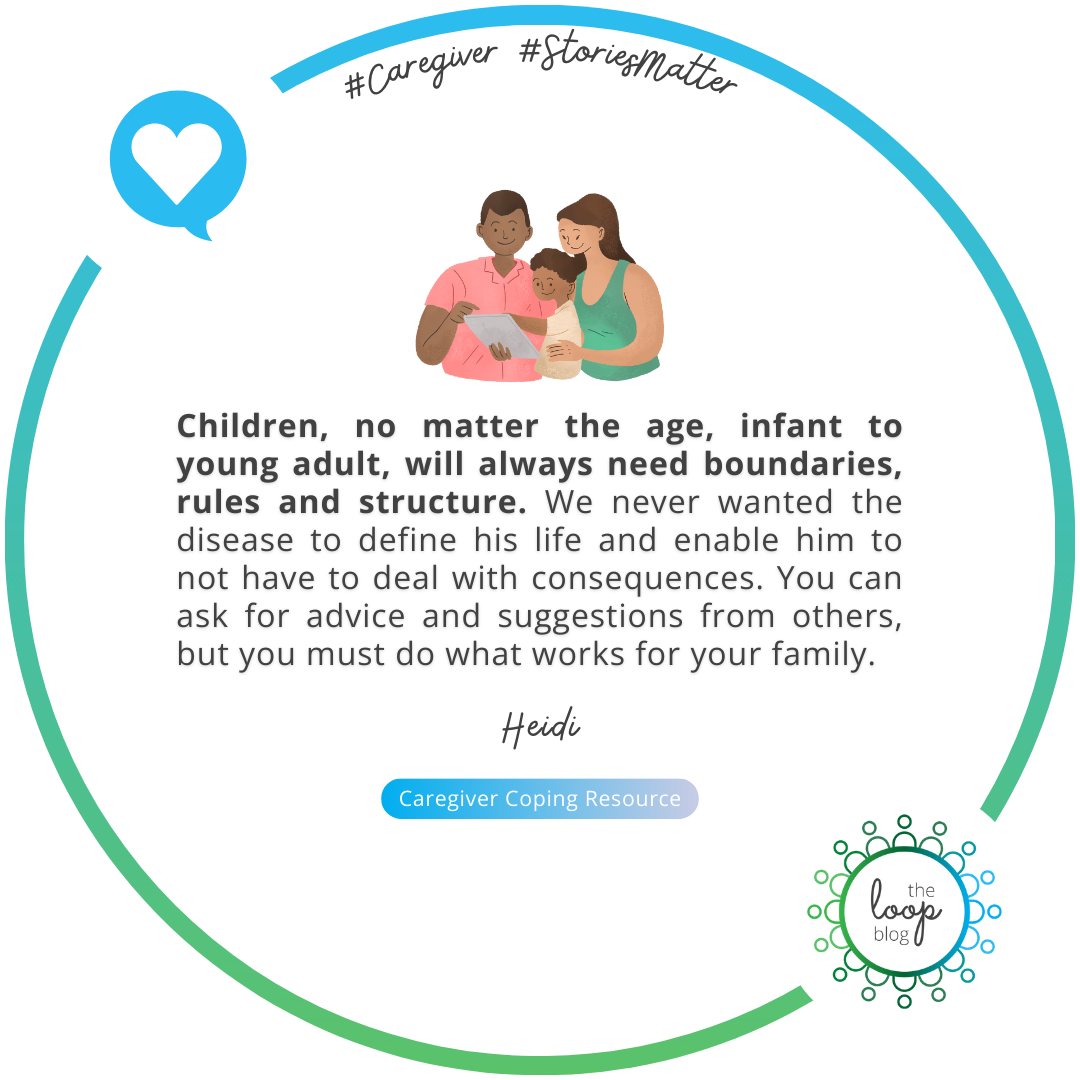
It is only natural to feel torn between wanting to still “parent” our children and “cut them some slack” when they have been diagnosed with a chronic disease. It is important to know doing both is ok. Every family must make the best choice for their child and their own mental well-being. For us, we found that we were not going to stop “parenting” our son after his IBD diagnosis. He was a teen who was still a teen (he vaped, lied, had an attitude etc.). He knew we were still going to discipline and have rules. However, we also knew we had to learn to love him where he was in his journey and it was ok for us to show him grace and let things go from time to time. Children, no matter the age, infant to young adult, will always need boundaries, rules and structure. We never wanted the disease to define his life and enable him to not have to deal with consequences. You can ask for advice and suggestions from others, but you must do what works for your family.
Maintaining routines and schedules as much as possible can be helpful, with exceptions as needed. For example, if your child usually gets a story read to them before bed, this can still happen during an inpatient admission.
Maintain routines and house rules as much as possible. This may mean consistency with bedtimes, chores, or continuing to use time-outs or groundings if your family uses these strategies. Sometimes there is the instinct to be more flexible with siblings, like a later bedtime or a sibling not getting a time-out, but the research shows us that consistency helps children to know what to expect and may help siblings feel less stressed.
From Ildiko - IBD caregiver
A few practical tips we have found to be useful:
If and when children are well enough to go to school, play sports, and socialize—and they will be—let them! Prioritize this normalcy. When feasible, schedule appointments after school hours, during breaks, or at times when the appointments are less disruptive to routines.
Sports are physically and mentally beneficial, provided children feel up to it and it is cleared by their physician. We like to remind ourselves that there are many successful Olympic and professional athletes with IBD. We have found cross-country and track & field to be incredibly beneficial both mentally and physically.
Action Steps and Resources for Caregivers
💙 Try to replace the word “but” with the word “and” where you can, like “This is scary, and we can do this” instead of “This is scary, but we can do this.” The word “and” increases cognitive flexibility and can support realistic hope and resilience.
💚 Remind yourself that navigating life and your child’s chronic illness(es) is not a game of chutes and ladders, it is like a mountain range with times where things are on the up and up and times where it feels like you are in a valley. This can be a helpful visualization strategy to remind yourself that it is all part of the journey and the valleys do not last forever!
💙 Gently remind yourself that life is not a solo sport, nor is caring for a child with IBD and/or AILD. Consider making a list of your other ‘team members,’ like family, family friends, neighbors, religious community, and know that it is okay and brave to ask for support. If there are tasks that others can help you with – like asking a neighbor to pick up a few items at the grocery store – it can be helpful to outsource these tasks to someone else on your team.
If you are interested in connecting with other parents/caregivers of children with IBD and/or AILD to learn from their experiences and find support, consider joining:
- ImproveCareNow’s Parent/Family Advisory Council (IBD)
- Autoimmune Liver Disease Network's A-LiNK Connections (AILD)
Review resources from the Pediatric Psychology Caregiver Wellbeing Special Interest Group, including free and reputable resources on how to find a mental health professional for yourself as a parent and learning more about your emotions.
- If you use social media, you can follow this Caregiver Wellbeing Special Interest group at “caregiverwellbeingspp” for other reputable resources and strategies.